Showing posts with label Chrysler Corp.. Show all posts

Sunday, 6 February 2022

“This year, more than ever, the luxurious styling of the new Plymouth complements its superlative performance. Take Plymouth’s rakish new lines, for instance. At the front end, hooded headlights thrust eagerly forward. Body lines are crisp and clean. And the distinctive rear fins mark this car as the fashion leader of its class.”

As usual, the 1950s catalog poetry sounds amazing and seems convincing. Not so much, though, when you compare the “new” Plymouth with the previous model year: it’s the same design, aside from the high “airfoil” tail fins that were added to the rear fenders. Only few would notice another “improvement”: the push-button door handles of the 1955 models made way for novel pull-type openers.

The front end remained unchanged, save for a new grid pattern insert in the center of the grille. This stylistic restraint was remarkable in a time when the competition introduced massive yearly redesigns to make their cars appear “all-new”. 

But all in all, there was no need for dramatic change, as the 1956 Plymouth still looked “fresh”, profiting from the tremendous impact that Virgil Exner’s “Forward Look” design had made in the year before. And behind the scenes, an even more striking next generation of “Forward Look” models was already prepared for launch.

Saturday, 29 January 2022

“BEAUTY QUEEN OF ITS CLASS!” 

It’s safe to say that Plymouth wasn’t considered being sexy in the early 1950s: the stodgy Keller Boxes and their sensible successors sure were rational rather than emotional choices. Which certainly didn’t help selling them in a time when flamboyant car styling and overstated extravagance became the number one selling point for most customers. 

That changed in October 1954 when Chrysler’s chief designer Virgil Exner introduced the new “Forward Look” models for 1955, flabbergasting customers and experts alike. Suddenly, all Chrysler brands sported well-proportioned, elegant and, above all, striking looking cars. Even Dodge and Plymouth, the lowest Mopar divisions, now had models that were on par with their best competitors — and even better looking.  

Plymouth more than corrected a perceived disadvantage it had with the „too compact“ looking 1953-1954 models: suddenly the Plymouth was five inches (12,7 cm) longer than the Ford, and outsized Chevrolet by eight inches (20,3 cm). That enlargement shows, even in our battered example from Sancti Spiritus. Especially the low cabin, clean lines and a long looking front end, due to the canted headlight covers, make the all-new Chevrolet and Ford (themselves being doubtlessly great designs) suddenly look a little stubby...

Sunday, 16 January 2022


„Fury fits right in with your ideas of fresh mid-size styling. Long, beautiful lines and wide expanses of glass, and standard upper-level ventilation. Tasteful accents of bright trim moldings. It’s the kind of car you’d be proud to bring home.”

This Plymouth Fury from Cienfuegos is another of those cars that don’t quite fit into the typical automotive landscape of Cuba. The great proportions, long bonnet and Coke-bottle hips make the Plymouth look large, but it was based on Chrysler’s corporate B-body and deemed a mid-size car back then. 

Presented in 1971 as the Plymouth Satellite, this generation was produced until 1978, withstanding various facelifts and a name change. For 1975, the Satellite designation was abandoned and the Fury nameplate, once synonymous for Plymouth’s best performance cars, now tickled down from a full-size model into the sensible mid-size segment.

Plymouths of that vintage are probably best remembered as typical “cop cars” in the U.S., being immortalized in that role by many Hollywood movies and TV-shows. Back then, the Fury was one of the cheapest mid-size Mopars available, which made it an ideal fleet car for any federal accountant. Hence it was a staple of many police departments and government agencies. Patrolmen loved it, too, because it was spacious and — with the right engine — a zesty ride. 

Under its long bonnet, the Fury could accommodate almost every engine available in the Mopar portfolio, from the 225cc (3,7L) six cylinder up to the mighty 400cc (6,6L) V-8. A vaunted 440cc (7,2L) E86 440-4bbl powerplant with 255hp was reserved for police cars, and transformed the Plymouth into a veritable missile on wheels: back then, a top speed of 133 mph (214 km/h) was quite impressive. However, that 440 option was dropped already in 1978, when Chrysler quietly abandoned the big-block engines due to tightening emission regulations.

We wouldn’t be surprised if our pictured Fury has spent its former life in an official yankee fleet before being shipped to the communist island. If it ever had a big-block engine, it sure isn’t installed anymore, as running such a monster under the precarious fuel supply situation in Cuba would be a prohibitive labour.

Friday, 20 November 2020

“Call it what you will — sound thinking, great engineering, or just plain consideration for your comfort — we think you’ll find that the new ‘53 Plymouth offers you more of it than any other car in the lowest-priced field. But you be the judge! You have a standing invitation from your Plymouth dealer to look, ride, drive, compare. Then we believe you’ll agree: there’s more quality in it — you get more value of it!” 

The 1953 Plymouth is perhaps the most underrated car of the 1950s, shunned by the consumers (and later by the historians) as a design inferior to its competition. In fact, in a time when fancy „longer and lower“ styling was de rigeur, and upsizing was the name of the game, the new Plymouth bucked the industry trend by actually becoming smaller and looking remarkably dowdy. 

Plymouth consolidated its lineup for 1953 down to two trim levels, sharing the same 114-inch (2,90 m) wheelbase. While the entry-level „Cambridge“ benefitted from the new dimensions, the top-level „Cranbrook“ now became 4,75 inches (12 cm) shorter than in the previous years — and lost a whopping 4.5 inches (11 cm) of wheelbase, too. Nonetheless, the cabin became roomier than before because the engine moved forward. Thus, rationally, Chrysler engineers had designed a smarter car with an improved package, shorter overhangs and a roomier cabin, and incidentally anticipated proportions that should become common-sense much later

But the fact of the matter is that most car buying decisions are made on an emotional level. And in 1953, downsizing was completely out of sync with the contemporary taste that favored longer, lower and glitzier designs, and generally wanted a certain visual “bang for the buck”. 

A comparison with the main contenders shows this predicament. While the Plymouth’s 114-inch wheelbase was a mere inch (2,5 cm) shorter than the Chevrolet and Ford (both placed on a 115-inch wheelbase), the competitors were much longer overall, and made the Plymouth seem like a smaller car: the 1953 Chevrolet was six inches (15 cm) longer and the Ford added a whopping nine inches (23 cm) to the Plymouth’s overall length. Hence, the Plymouth rather became a car of choice for the ones that wanted value for money and didn’t care for the looks. Which was already a minority in those times. Incidentally, you rarely see a Plymouth of that generation in Cuba. We reckon that they weren’t exactly compatible with the Latin show-off culture, either. 

Regardless, 650,500 Plymouth found new homes in 1953. It was a new high for the company, but you need to put these numbers into perspective: in the same time, arch-rivals Chevrolet and Ford produced a whopping amount of 1,346,500 and 1,247,500 cars, respectively. And Plymouth’s surprising production record of 1953 was short-lived: already in 1954, sales nosedived by nearly 190,000 units, down to the level of 1952. Again, that wasn’t really the fault of the design, which remained unchanged, save for some minor trim changes, but rather the effect of a fierce “sales war” that Chevrolet and Ford had initiated and that left all other manufacturers in the dust. 

But there was light at the end of the tunnel: behind the curtains, a new generation of Plymouth cars was already waiting to be launched. These new “Forward Look” designs would finally sport proportions that matched their stylish aspirations.

Tuesday, 3 November 2020


“El Dodge 1500 es como una vuelta en la calesita”

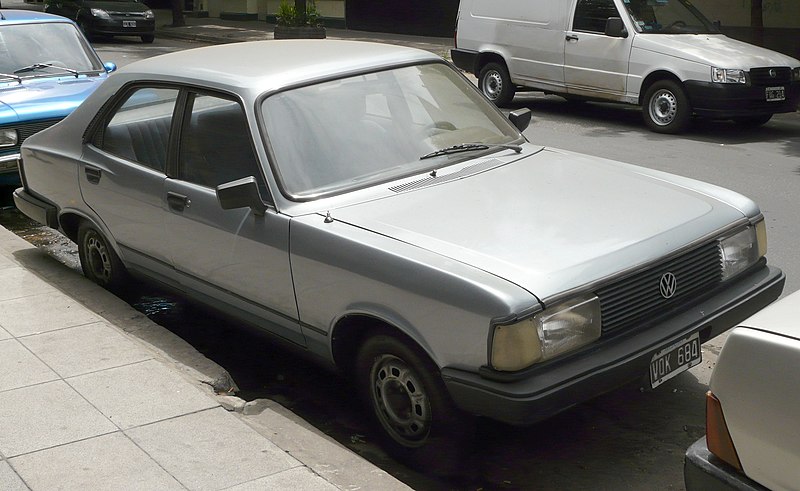
“The Dodge 1500 is like a ride on the merry-go-round”, waxed Argentinian copywriters in 1971. Well, while the car sure wasn’t that exciting, its genesis certainly is: this Argentinian model, despite its American nameplate, actually originates from England, where it was launched as the Hillman Avenger in 1970. Hillman was an established car manufacturer in England, and since 1927 part of the Rootes Group that united various British makes under one big brand umbrella. We covered some of the irrational insanities of the postwar British car industry on previous occasions.

Designed under the lead of Rootes’ Styling Director Roydon Axe, the Avenger project began taking shape already in 1963, but faced long delays because other models of the Rootes portfolio had to be launched before. Meanwhile, Chrysler began to expand its business in Europe by buying shares of the ailing Rootes Group from 1964 on, and fully owned it by 1967. When the Hillman Avenger finally was presented in 1970, the motor press wrote favorably, praising its good road manners and the contemporary styling. With its Coke-bottle hips, the car definitely looked “American” even if it was pretty small. Thus, the Chrysler management saw fit to sell the Hillman Avenger as a compact Mopar worldwide. The Avenger blueprints were adapted for production in various countries, among them in Argentina, where it was produced and marketed by Chrysler-Fevre Argentina S.A.I.C. as Dodge 1500.

The Dodge was an instant hit with Argentinian buyers, and should soon get the reputation of being tough as nails, which resulted in a loyal fan base and a 20-year long production run. Its popularity didn’t even fade when Volkswagen took over Chrysler Argentina in 1980 and kept on selling the Dodge 1500, rebadged as “VW 1500” until 1990.

The simple technical layout and sturdiness made the Dodge 1500 an ideal choice for the Cuban officials when they selected the cars that would be part of the huge trade deal with Argentina, and in 1974, thousands of Dodge 1500 were imported to the island. Initially they were used as Taxis, but over the years many tickled down to the private car market. Here it seems to be the dream car of the younger crowd, because many Dodge 1500 we see in Cuba wear striking colors and wild decals.

Friday, 1 May 2020


„Only rarely does a new car appear on the scene so brilliantly designed that it has no counterpart. The Swept-Wing 58 by Dodge is such a car. It is a car of noble proportions — clean of line, daring in sweep, low in silhouette — beautifully simple in every detail. You can see this simplicity in the smart new grille, handsomely-styled and in perfect taste. In the flat, taut hood. In the vast Sweep-View windshield. The smooth, unbroken line from bold Twin-Set Headlights to soaring Swept-Wings. Expect to see a great many people step out in a low-slung Swept-Wing Dodge in the months ahead. Wouldn’t it be fun to be one of them?“

Coming at you full steam ahead, the 1958 Dodge really looks impressive. The fender badge and trim details indicate that this is a Custom Royal, the flagship model of Dodge’s 1958 lineup. All Dodges shared the same body, and differed merely in trim and engine choice.

The second generation of Virgil Exner’s „Forward Look“ design direction featured cars with even more dramatic proportions than their predecessors. These Mopars easily won the unofficial industry-wide contest for designing the longest, lowest and widest looking cars. But the obsession with a low silhouette required some compromises. As large as these cars were outside, you can notice, with passengers inside, that headroom and an airy cabin certainly were not their forte.

Thursday, 27 February 2020


„From the luxurious ‚jewel-case’ interiors to the gem-like precision of its fine engineering, quality stands out everywhere in this great Plymouth! Now, more than ever, it’s the low-priced car most like the high-priced cars. It offers you a long list of ‚exclusives‘ in the low-priced field, and many features not available even in cars costing hundreds of dollars more!“

The „big“ Plymouth for 1951 had a lot to offer: a solid and durable construction, plenty of headroom and loads of value for the money. One thing that it hadn’t, though, was fashionable styling. Unfortunately, this was precisely what car buyers longed for in the early 1950s. Others delivered, but Plymouth not.

Not that the redesign for 1951 wasn’t a significant improvement: the Plymouth designers, directed by studio head Henry King, had worked miracles to let the angular “Keller boxes” look sleeker and rather modern. The cars received a completely new front end, but the stodgy silhouette of the previous generation remained. Compared to the Plymouth’s more fashionable competitors, it becomes obvious why these cars weren’t so popular.

But, like all Chrysler Corp. models of this era, the Plymouth excelled in sound engineering, and was a great choice for sensible motorists that turned the penny twice before buying. Which might be a reason why so many are still roaming Cuban roads today.

Monday, 17 October 2016


"Motorists with a feeling for style and an instinct for value are satisfying both sides of their nature with the stunning new Chrysler Windsor Deluxe. Here's why, in the simplest terms: It's a BIG car . . . with big-car comfort, prestige and resale value. It's a brilliant full scale example of Chrysler's new '100-Million-Dollar Look,' a shining sweep of tailored steel, longer and lower than other big cars. Yet it can be yours for lots less than you'd expect!"

The 1955 Chrysler was a genuinely elegant automobile: alluring curves and stunning proportions, highlighted by the extreme ratio of glass to body, made the Chrysler stand out among its peers. Seemingly out of nowhere, Chrysler offered desirable cars again, and only few noticed that this was due to a paramount change in the company’s internal organization.

American car makers had good times in the latter 1940s, when their customers snatched up literally everything that had wheels. With the postwar car market becoming saturated, however, car styling again became an important sales factor. Which put particularly Chrysler in a dilemma: Mopar cars were powerful and well engineered, yet they didn't raise many pulses, as they simply didn't look the part. Adding insult to injury, the company was slow to adapt to the obvious change of customer expectations and stuck to practical and stolid cars — the dull "Keller boxes". In this light, the stunning Chryslers for 1955 became all the more surprising.

Chrysler's chairman K.T. Keller had at least realized the harmful effect of his conservative approach to car design on the sales numbers. In 1952, he offered Virgil Exner — by then head of Chrysler's advanced design studio — the opportunity to design the entire range of 1955 Chrysler cars. Timing was critical, and to achieve the task, Exner demanded a significant change in Chrysler's design organization. Until then, the clay modelers were subordinate to the engineering department. The designer's role was merely to provide the drawings that the engineers and clay modelers then would translate into styling models. Hence, critical design decisions ended mostly in favor of engineering. Exner now requested the clay model studio to be under control of the stylists, and K.T. Keller, hesitantly, approved. It was the right decision, visible in the immense improvement of the 1955 Mopars over their predecessors, and crucial for the tremendous rise to styling leadership with the next generation of Exner-styled Chryslers.

Completely redesigned, and dubbed "Forward Look Chryslers" by the copywriters, the new models were handsome and elegant. The customers did resonate well with the new styling direction, and Chrysler could boost its sales to more than 152,000 cars, 45% more than in the previous year.

Monday, 20 June 2016


"THERE COMES A DAY of decision in everyone's life . . . whether to stay with the old, or step out and up with the bold and the new! You'll never know more thrilling excitement than when you slide behind the wheel of a 1951 Dodge, whether it be stunning convertible, practical sedan or proud station wagon. Dodge for '51 brings you more of everything you want . . . more vision, more roominess, more comfort, more safety. It is literally true you can pay up to a thousand dollars more for a car and still not get all the extra-value features that are built into those great Dodge cars. We say, 'Drive the new 1951 Dodge for five minutes and you'll drive it for years.' "

If aired in Cuba today, Dodge's advertisement would probably sound like a threat rather than a promise to the owner of this Dodge Coronet from Ciego de Avila. Here, you'll need to drive the car for years, and even decades, as there's yet no real alternative to vintage Detroit iron if you want to own a private car. Dodge's top-of-the-line car for 1951 at least offers plenty of space and a comfortable ride.

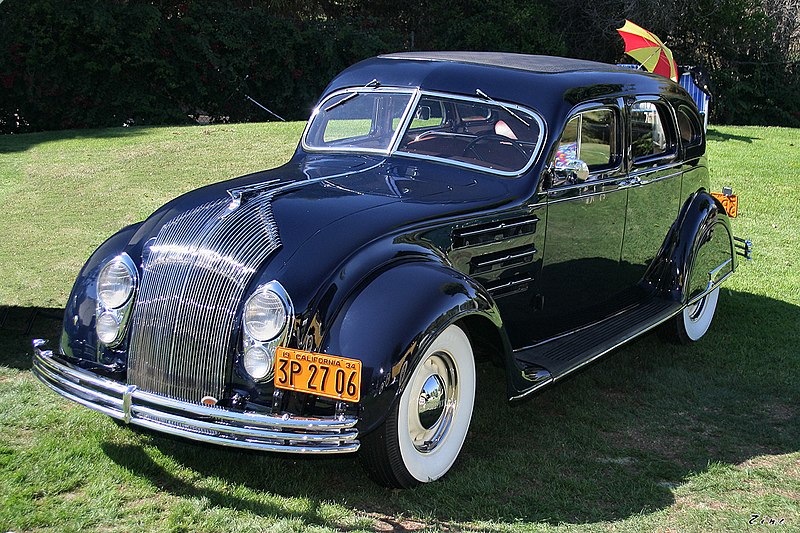
Among Detroit's "Big Three", the Chrysler Mopars definitely underwent the most dramatic transformation in the early 1950s. The streamlined Chrysler Airflow of 1934 had been decidedly advanced in styling and technology, but turned out to be a commercial disaster. In response to this experience, Chrysler became extremely conservative in the following years, putting practicality and a sound engineering before everything else. The first generation of the all-new postwar Mopars was still developed in this mindset. Nicknamed after Chrysler president K.T. Keller, these "Keller boxes" excelled with quality, but certainly not with style.

Chrysler designers under styling chief Henry King worked miracles to modernize the look of the "Keller boxes" with the 1951 facelift. Yet, there wasn't much they could do: Chrysler's stylists were still subordinate to engineering, and thus had to obey all conservative engineering decisions. Because the structural body was carried over unchanged, the cars kept on looking pretty stodgy and angular. But the new front end with its much softer sculpted bonnet and the low, horizontal front grille made the car blend much better with the contemporary trends. While the design wasn't yet a match for the fashionable competition, the gap was closing.

Chrysler president K.T. Keller was responsible for the stodgy and conservative "Keller boxes", but to his credit he also hired talented designer Virgil Exner from Studebaker in 1949 to lead the Chrysler Advanced Styling Group. After creating some stunning show cars, Exner should become head of Chrysler styling in 1953, and the "Forward Look" Mopars — the first generation of Exner-styled cars — should instantly catapult Chrysler to the top of the automotive fashion game.

Friday, 27 May 2016


"Your car is the most beautiful of all cars — fleet, clean-sweeping, alive with excitement. You enjoy the years-ahead performance of the greatest engineering the industry ever achieved — with all its deep-breathing power, its sure and satiny handling, it's unlimited comfort and luxury. Your own Imperial is waiting for you now."

Waiting for a rebuild in the streets of Havana, this Imperial from 1958 shows off its imposing proportions. With an overall length of 225.7 inches (5,73 m), these cars weren't exactly compact: a modern Mercedes S-Class in its most luxurious long-wheelbase version measures 203 inches (5,18m) — half a meter shorter than the Imperial.

With the second generation of Virgil Exner's "Forward Look" styling, Chrysler presented a spectacular lineup for 1957. Virgil Exner took particular care in designing the Imperial, almost living in the Imperial studio, as one colleague remembered. While the 1955-1956 models were very elegant cars, the new Imperial became quite a show-off, embodying what the copywriters proudly called "The Finest Expression of the Forward Look." A low stance and high tailfins were a general order of the day, but their compact torsion bar front suspension made the "Forward Look" Chryslers clearly stand out of Detroit's flock. The fancy of having the lowest appearance even compelled the copywriters to declare only a "loaded" overall height of 56,7 inch (1,44 m) in the 1958 Imperial catalog.

The striking Imperial design remained virtually untouched between 1957 and 1960, save for the addition of quad headlights as a standard feature for 1958, and cosmetic changes at grille, bumpers and trim. This was quite unusual in a time when the general consensus demanded wild and extensive model changes each year. Yet, change wasn't really necessary, as the Imperial anyway stood out with its serene proportions and volumes. Only the "simulated deck tire mount" and "Imperial gunsight taillamps" added some contemporary extravaganza.

Achieving this design, however, required a massive investment in the latest technology. The huge compound-curved "Super-scenic Windshield" and curved side glass — both an industry first — tell that Chrysler didn't spare any expenses to accomplish that modern look. It didn't help at the dealers', tough. Not even the designers, always in touch with future trends, could anticipate that an economic recession would force the buyers to sit taut on their wallets in 1958: Imperial sales nosedived to 16,133 cars from a staggering 35,796 in the year before.

Saturday, 14 May 2016


"If it's the most value you want, it's the New Plymouth you want. Here's an easier car to drive — a safer, more comfortable car to ride in — a sturdier more powerful car for long-time, dependable performance — the greatest of all great Plymouths!"

They might not be the most stylish sizzlers, but Chrysler's "Keller boxes" are remarkably well engineered automobiles. Their quality shows today, on Cuban roads, in the oftentimes surprisingly good condition of these cars.

Our pictured Plymouth from 1949 and its owner, Argelio, regularly participate in rallies and other activities of Havana's renown Escuderia de Autos Clásicos — A lo Cubano. Hence the various stickers. The car was even awarded first place for its "original condition" in one of these competitions. Jurors of classic car clubs in other countries would probably disagree with this assessment. Yet, the preconditions for "original" certainly differ in Cuba. Consider this: rather than in an air conditioned garage, the Plymouth has spent its entire life on the road. After more than six decades in regular use, it still runs with the first engine, transmission and drivetrain, says Argelio, despite the lamentable lack of factory service and spare parts. That's quite an achievement. Details like the delaminating windshield give the Plymouth a nice patina — much more fascinating than any fully restored and pampered "trailer queen".

Thursday, 12 November 2015


„This year Dodge brings you a new fashion show on wheels – fresh-full of styling advances that are a dream away for ordinary cars! New 'safety-made' dual headlamps on every model! New glamour grille! New dashing color sweep! Here’s Dodge Flight-Sweep ’58 beauty . . . fleet-finned, sleek-lined and ready to win a place in your heart!“

Dodge by its badge, but Plymouth by any other name, this Kingsway Custom from Havana is a truly nice looking "Plodge". Easily discernible from the "real" 1958 Dodges by different tailfins and door handles, the Kingsway Custom was essentially a Plymouth Belvedere with a Dodge front clip bolted on. Chrysler built these export vehicles, based on the cheaper Plymouth platform, to give its dealers abroad competitively priced entry-level models.

With the chofer at the wheel you can see how nimble Chryslers "Forward Look" models actually appear, particularly when compared to the bloated GM designs of the same year. No surprise that the first sight of these Chryslers in late 1956 caused quite a dismay among the GM designers and triggered the move towards a leaner and cleaner styling for the whole 1959 GM lineup.

Thursday, 11 June 2015


"Step up to the Mighty Chrysler. Walk around it — let your fingers follow its clean and lustrous lines. Here, you sense, is a car that almost demands to be driven. Ease behind the wheel. Lounge and feel the deep pile carpeting underfoot. Survey the eye-catching world about you. Could any throne be more commanding?

Alert the engine and feel, ever so faintly, this Mighty Chrysler bridle for action. Push a button and head for the open road. Never have you dominated motion, space and time so completely! As you glide over rough spots and straighten the tightest curves, you give a silent salute to Chrysler's Torsion-Aire Ride. Let Chrysler prove its power. Touch the accelerator and surge ahead."


This view nicely shows why Chrysler's "Forward Look" design was so cutting-edge in the latter 1950s. The impressive front end really seems eager to eat up the road. With the annual facelift, the grille became even cleaner and wider looking than in its introductory year 1957. The subtle winglets at the outer tips of the bumper and massive tailfins — so dominant that Chryslers copywriters even invented the term "Directional Stabilizers" — create a purposeful, aerodynamic impression. Effective or not, if you have seen one of these Chryslers roaring down Cuba's autopista, you can sense that these cars were a different animal than your average chrome-monster of that year.

Best of all, that look wasn't just a promise, as these cars were truly serious driving machines, too. The advantages of Chrysler's "Torsion-Aire" torsion bar suspension — superior road holding and compact construction — gave an extra edge to the Chryslers: no one else could achieve such a low-slung silhouette with conventional suspension. Did we mention "Constant Control Power Steering" and "Torque Flite" transmission with "Push-Button Control" to bring the 310 horses of its 354 cubic-inch (5.787 ccm) "Spitfire" V-8 engine down to the tarmac, or the "Total Contact Brakes" to stop them?

Even without its original engine, the pictured Chrysler Saratoga is a regular award winner for its complete and authentic condition. Its owner, Reynaldo, is pretty proud of his car, and likes to display it whenever possible. The annual assembly of Havana's renown Escuderia de Autos Clásicos — A lo Cubano at the discotheque "Macumba" in Havana's La Lisa suburb is such a welcome opportunity. Here, period cars and people in period fashion nicely recreate the flavor of past times when these cars still were la última moda.

Tuesday, 17 February 2015


"Here's beauty that keeps its promise! One glance at this excitingly new DeSoto and you can imagine yourself behind the wheel — in luxurious comfort — proudly in command of the road."

Here is a car from Canada that you couldn't buy in Canada. Assembled in Windsor, Ontario, just south of Detroit, our pictured DeSoto was solely built for Chrysler's export markets.

Presumably, Cuban DeSoto owners traveling to mainland America were in for a surprise when they came across a DeSoto there. The American models sported a wider "grin" up front and powerfully bulged rear fenders. In fact, they were utterly different cars, based on the bigger Chrysler platform. The DeSoto on sale in Cuba merely looked like a DeSoto: technically, it was a 1954 Plymouth Belvedere Club Coupe with a DeSoto front end bolted on. Commonly known as "Plodges", these cars combined the cheaper Plymouth body with a „branded" front end, so that Chrysler dealers abroad were able to sell upscale Dodges and DeSotos at competitive prices.

With a wheelbase of 114 inches (2,89m) and an overall length of 193.5 inches (4,91m), the Plymouth-based export DeSotos were more than half a meter (21 inches) shorter than their American counterparts that stretched over a whopping 214.5 inches (5,45m) on a 125.5 inch (3,19m) wheelbase. Considering Chrysler's pricing policy and import taxes, Cuban customers had to pay more money for a smaller car. Not surprisingly, quite a few smart Cubans brought their DeSoto as a "used car" from the U.S. to the island. Key West was just a short ferry ride away.

Notwithstanding, even in DeSoto "disguise", the Plymouth based export model did look actually quite imposing, and much more elegant than your common Plymouth sedan. Only the proportions weren’t really stunning: the high cabin was a tribute to an already three-year old platform, descendant from the infamous "Keller boxes". In a time when customers longed for stylish “longer and lower" looking cars, this was a serious disadvantage. But help was on the way: already next year, Chrysler’s "Forward Look" models, styled under the lead of Virgil Exner, should catapult Chrysler styling to the top of the buyer's wish lists.

Saturday, 1 November 2014


"Step into the wonderful world of AUTODYNAMICS!"

Chrysler's foray into car styling leadership didn't end with the first generation of Virgil Exner's stunning "Forward Look" models. The second generation, launched in 1957, looked almost ridiculously long, low-slung and nimble, and gave the designers over at GM quite some headaches. For years, Harley Earl and his design department had promoted the longest and lowest looking cars in the industry. Yet, next to a new low-slung Chrysler, Dodge or Plymouth, suddenly their Chevrolets, Buicks or Oldsmobiles looked quite bloated.

A new, space-saving torsion bar suspension allowed for both superior handling and dramatic low looks. Even more so when the roof was off, like on our pictured Dodge Custom Royal Lancer Convertible.

Dodge's daring Jet Age styling certainly inspired the division's copywriters. They invented "Autodynamics" to praise the qualities of the new "Swept-Wing" Dodges: "Autodynamics  . . .  where everything is new from road to roof! You sweep along in a low-slung, swept-wing beauty barely 4 1/2 feet high, cushioned in a 'Realm of Silence' by new Torsion-Aire Ride. A touch of your toe unleashes a hurricane of power, tamed to your command by new Push-Button Torque-Flite Drive that packs a 1-2 punch. You have never seen, felt, owned anything like it."

Monday, 11 August 2014


"These big new roomy Dodge Station Wagons are so colorful and bold, you'll feel like a swashbuckler behind the wheel. And their lively performance will make you invent every excuse to pick up and break-away  . . .  especially with the stepped-up surge of the Super-Powered Super Red Ram V-8 engine at your command. Step in, press a button and take off with the Magic Touch of tomorrow!"

After years of rather stodgy styling, Dodge introduced the stunning all-new "Forward Look" lineup in 1955. 1956 saw minor modifications but anyway, there wasn't much need for change, as the basic proportions of these cars were just spot-on. Now, even the more modest models had become fast and elegant driving machines. Case in point: our pictured Dodge station wagon. 

At a glance, it looks like an ordinary Dodge Custom Sierra station wagon. Look closer, and you'll discover Plymouth tailfins aft. The reason: it's a Canada-built export model, which were generally based on the cheaper Plymouth body, "adorned" with Dodge or DeSoto front clips to add some glamour and reason to command higher prices. Accordingly, the Dodge Kingsway Deluxe Suburban was essentially a dressed up Plymouth Savoy Suburban.

In the US, station wagons became quite popular in the 1950s, when the demographic change triggered a massive movement out of the cities into the emerging suburbs. This lifestyle required mobility and was one major reason for the tremendous increase of new car sales in that time. While earlier station wagons typically had been rather utilitarian vehicles, customers now discovered the advantages of space and flexibility but, of course, without sacrificing the comfort they were used to enjoy in their sedans. The manufacturers reacted and began offering lavishly equipped and stylish station wagons, too. Yet, Cuba's motorists were obviously a much more conservative clientele. Here, the station wagon never ceased to be a niche product. However, the few who ordered a wagon certainly were profiting from the new focus on style and comfort in their cars, too.

Friday, 27 June 2014


"Its distinctive styling goes far beyond just pleasing the eye. Here's design that flows naturally from advanced engineering  . . .  to fit form and function  . . .  to offer a great New Plymouth that, inside and out, is better in every way!"

Aside from the nice patina, this Plymouth DeLuxe from Havana still looks pretty much like when delivered 65 years ago. The classic car scene in the US would certainly call this car a "survivor": all trim is in its place and there's no sign of the fancy tuning attempts that you can witness on so many other vintage Cuban cars. Well, looks can be deceiving, but we like to believe that underneath the patina there is a well-kept original car waiting.

Like all other Chrysler divisions, Plymouth presented its first all-new postwar design in early 1949. When these cars were devised in the mid-40s, World War II had just come to end and civil car production resumed. With no supply over the last few years, customers were buying literally anything on wheels. Rather than good looks, practicability and reliability were the major buying reasons. In these disciplines, the new 1949 Plymouth certainly delivered spot-on. The cars were well-built, comfortable and offered ample interior space. But, as Plymouth soon should discover badly, in 1949, the automotive world had already changed.

Now, the own car increasingly began to become a personal statement, and buyers were looking for styling and brand image in their new automobiles. More than anyone else, GM hit the sweet spot, as all of its divisions were churning out stylish automotive sculptures. "Chrome and glamour" was the name of the new game, and these days, Harley Earl and his designers clearly were setting the trends in car styling.  Surprisingly enough, customers did accept little compromises. Tight headroom for the rear passengers? No problem, sir! Instrument gauges difficult to read? But it looks so marvelous, buddy!

In this climate, the "Keller Boxes", as Chrysler's offerings soon were dubbed, had a hard time. They sure were high-quality cars, but the aura of progress was severely missing. Even a 1949 Ford looked more modern in comparison. Many customers bought elsewhere, and Plymouth could sell only half as many cars as with the outdated 1948 lineup. It should take six more years before Chrysler would finally catch up and take the lead in American car styling.

Tuesday, 27 May 2014


"America's First Family of Fine Cars offers for 1953, not only the finest engineered, but also, the most beautiful Chryslers ever designed. And it is this rare combination of fine engineering and exquisite beauty that makes the Chryslers the finest cars America has yet produced."

The indicator light pods suggest that this pretty battered looking Chrysler from Sancti Spiritus is a 6-cylinder powered Windsor Deluxe Newport. You won't find many Chrysler cars of that period on Cuban roads and among them, hardly ever you'll find a Newport 2-door hardtop.

Regrettably for the company, the conservatively styled Chryslers of that era weren't very popular. Just about 170.000 Chrysler left the factory in 1953. Put it into perspective: in the same year, 488.805 Buicks, 341.264 Oldsmobiles, and a whopping 1.1 million Chevrolets, including 300 Corvettes, were produced. Chrysler was a profitable company, but the big business clearly belonged to GM and Ford.

This sure wasn't the fault of Chrysler's engineers, as Chrysler engineering used to be the envy of the whole industry: the newly launched "Hemi" V-8 engine with its hemispherical combustion chambers, for instance, made the Windsor's sister model Chrysler 300 the most powerful American car of the time. In the quality department, too, Chrysler continuously excelled with a solid and long lasting construction. Yet, in a time when fancy styling ruled over quality, strong inner values alone weren't a good argument to win over prospective customers.

Saturday, 19 April 2014


"Newport's surprisingly low price has caused thousands of smart car buyers to move up to Chrysler. And because Chrysler builds full-size cars only, your new car investment is fully protected. No small car steals the thunder from the Chrysler name — or the pride you'll take in owning one!"

Here's a car that doesn't seem to fit quite well into Cuba's automotive landscape: in 1962, the U.S. trade embargo came into full effect and car imports from Detroit went down to quasi zero. So, what is a Chrysler from 1962 doing here? Nelson, the owner of this Chrysler Newport from Cardenas, knows the answer: "This was one of four cars used by the Canadian embassy in Havana. At one point in time, the cars were donated to the church and served there for long years. Somehow, my family later got into possession of this Chrysler." We can only speculate what "somehow" means.

Technically, the 1962 Chryslers were quite advanced cars. All fullsize Chryslers had been adopting a modern unibody structure in 1960, while the main competitors still used a classic body-on-frame construction. Too bad, that the modern engineering wasn't reflected in the design, as Chrysler styling perseverated in the 1950s for too long. Large tailfins and excessive chrome detailing which the rest of the industry had already abandoned, remained a Chrysler identifier through 1961. Perhaps, for just a little too long Chrysler was hoping to ride the wave of success that they had enjoyed with the first and second generation of Virgil Exner's "Forward Look" cars. 

Adding insult to injury, wrong decisions of Chrysler's brass should severely hamper progress. Chrysler design always had had its up and downs. But at the dawn of the 1960s, Chrysler was sailing through really rough waters, and the 1962 models are a testimony of these times. When their development was under way, William C. Newberg became Chrysler's new Vice President. 64 days later, he should already be dismissed, when evidence surfaced that he had financial interests in several Chrysler suppliers. Yet, these 64 days were long enough to cause enormous damage, because he had ordered a massive downsizing of Plymouth and Dodge models, that were already heading for production. In the following "crash-course", Chrysler designers literally worked their butts off in shifts around the clock, to minimize the production delay and to adjust the designs to the demanded proportions. Yet, the final result was less than convincing to say the least. Chrysler's design chief Virgil Exner was the only one to raise open criticism to the board. Ironically, he should become the scapegoat, being held responsible and fired in late 1961 when it became evident that these downsized cars wouldn't sell.

The styling of the fullsize Chryslers, luckily, suffered less from the chaos. For 1962, these models simply kept the front end of the previous model year, showing the same gaping grille and canted headlights. The large tailfins, a leftover of earlier "Forward Look" styling, were axed and replaced by a clean and boxy rear end. And, most importantly, these cars retained their good proportions since they didn't get downsized. Only the "Astradome Instrument Panel" with its big circular speedometer and lavishly applied brightwork still exudes an aura of the 1950s.

Saturday, 1 March 2014


"It's a pleasure to remind you that this stunning new 1941 Plymouth — so beautiful, so long, wide, low-swung — is a low-priced car! Inside, you'll find glamorous new Fasion-Tone Interior — a miracle in color, fabric, appointments. And you'll discover a new delight in Plymouth's new 4-way Step-Up in  Performance  . . .  giving you new mastery of hills and traffic! And, for 1941, Plymouth announces Powermatic Shifting  . . .  a new Oil-Bath Air Cleaner that adds to engine life and economy  . . .  new Engine Bearings which are 2 to 3 times longer-lived  . . .  new Ignition Protection to assure fast, easy starts! See and drive this Big Beauty today at your nearby Plymouth dealer."

This 1941 Plymouth from Havana exudes the aura of a time when the shape of American automobiles gradually evolved from engineered machinery to highly stylized moving objects. By the 1930s, all American car manufacturers had realized the increasing importance of car styling as a decision factor for new car purchases. Until then, car styling had largely been the business of engineers, with freelance artists and coachbuilders infusing them styling themes. Thus, of course, many interesting ideas were overruled by the practical approach of engineering towards car design.

GM would set a new trend in 1927 with the creation of the first corporate "Art and Color Section", directed by Harley Earl. Slowly but surely, all other manufacturers followed suit. In 1930, Raymond H. Dietrich became the first head of the newly established Chrysler Styling department. 

While Harley Earl at GM quickly began trimming the whole company towards obeying the demands of the styling department, engineers remained dominant at Chrysler. Naturally, the new focus on car styling caused much friction and often open confrontation between the corporate departments. Over one of these fights, Ray Dietrich was ousted in 1940, and Robert Cadwallader, much less belligerent than Dietrich, inherited the chief designer's position, becoming responsible for the postwar Mopar lineup.

Yet, before leaving Chrysler, Dietrich had caused quite a sensation with the decent looking Plymouth for 1939. As one novelty, this car featured a front grille with a strong emphasis on horizontal lines. Plymouth should retain that treatment over the next ten years. Thus, our pictured 1941 Plymouth is the famous exception to the rule, as this year the "typical" Plymouth front look was abandoned for something much more fashionable: a new heart-shaped front grille and gimmicky "Speedlines" at the fenders should impart a certain feeling of motion. Suddenly, the rather sensible Plymouth looked almost better than a Buick or Chevrolet, which themselves were considered cutting-edge designs. Customers liked these details and honored the fresh design with a massive demand: the annual production jumped from around 430.000 to just over 522.000 cars.

Search This Blog